
Patient stories: Jo Ann
Jo Ann
Polycythemia vera (PV)
Member of MPNRF Patient Engagement Advisory Committee
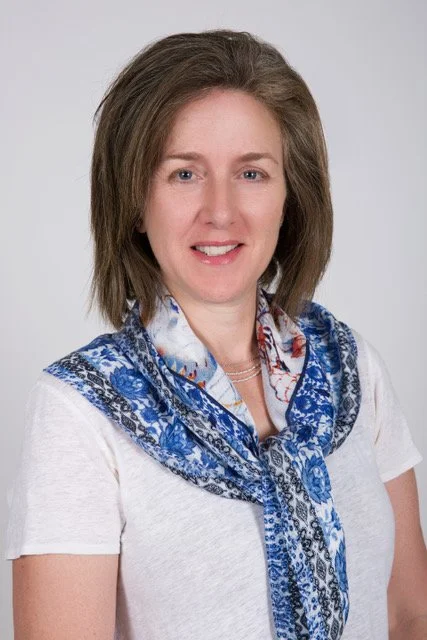
When Jo Ann Mannino was diagnosed with polycythemia vera (PV) more than two decades ago, the path forward was anything but clear.
“I was diagnosed 26 years ago after… having multiple visits and the doctors were trying to find out what was wrong with me,” she recalls.
At the time, MPNs were not widely understood. Patients often found themselves navigating a fragmented system where symptoms didn’t always translate into diagnosis and where clinical signals could be missed.
“It was like crazy misdiagnosis… all of them had my blood work on their desk and could see what the problem was if they thought about it,” she says.
Even when the data was there, the broader understanding wasn’t. Specialists worked in silos, and emerging insights had yet to reach the wider clinical community.
“It’s really dangerous… just assuming that there’s nothing physically wrong.”
However, she kept moving. A marathon runner, Jo Ann completed 17 races after her diagnosis, continuing to push forward even as something felt off beneath the surface.
It was during a climb to Machu Picchu that the disconnect became harder to ignore. Despite her fitness, she found herself struggling in ways she couldn’t fully explain, falling behind while others seemed unaffected. It was a reminder of something many MPN patients experience: even when life appears normal from the outside, the reality can be very different.
Her experience reflects a broader challenge that continues to shape the field today: ensuring that advances in research are not only discovered but consistently understood and applied across disciplines.
Entering the research community
Not long after her diagnosis, Jo Ann connected with MPN Research Foundation at a time when both the organization and the research ecosystem were still taking shape.
“One of the first patients that I met was Bob Rosen at the foundation… [I’ve] had a relationship with the Research Foundation since the very beginning,” she says.
At first, her involvement was simple. While training for marathons, she began thinking about how she could contribute.
“I was like… maybe I should try to raise some money… well, who do I raise money for?”
She organized a grassroots effort, raising a few thousand dollars to support early research.
“I just was able to raise like 5 grand… that’s how I got to know him.”
But what followed went far beyond fundraising.
Through the Foundation, Jo Ann was invited into rooms where researchers and clinicians gathered, spaces where patients were rarely present at the time.
“He invited me… to this dinner with all these researchers… Gary Gilliland,” she recalls.
What stood out wasn’t just access, but it was the exchange.
“They were… coming across the table… ‘You ran a marathon?’”
In a field where patients often struggled to be heard, these interactions felt different. There was curiosity, openness, and recognition that lived experience had value alongside scientific discovery.
For Jo Ann, it marked a turning point—from navigating disease alone to seeing how progress could be shaped through collaboration.
From patient to participant
Over time, Jo Ann’s role in the MPN community shifted.
“I became more involved in advocacy… started my own support group…”
What began at a local level grew into broader leadership across the MPN ecosystem. Today, she co-manages MPN-NET and serves on the board of directors of the MPN Education Foundation, where she helps organize a biennial doctor–patient conference alongside leading researchers, hosted by Dr. Ruben Mesa and Dr. Jeanne Palmer.
At every level, her focus has remained consistent: creating the kind of space she once needed — grounded in shared learning and understanding.
“It’s a way to give back… while also serving myself… I have to keep up on everything,” she explains.
Staying informed became essential for helping others and for navigating her own disease.
“I’m educating myself so that I can help other people get the information that they need.”
In a landscape where information is abundant, but not always reliable, she emphasizes grounding conversations in credible science.
“We do try and promote reading peer-reviewed articles… over something you see on social media.”
In helping others make sense of the disease, Jo Ann continues to refine her own understanding, reflecting a broader shift in which patients are not only receiving information but actively shaping how it is interpreted and shared.
Shaping research from the inside
Today, Jo Ann’s involvement extends directly into the research process, being a part of MPN Research Foundation’s Patient Engagement Advisory Committee and a reviewer in this year's MPN Challenge.
“This year was the first time I did reviews on the proposals,” she says.
It’s a milestone that reflects how much the role of patients has changed. Where patients were once outside the research process, they are now helping inform what questions are asked and which ideas move forward.
“There are things that I really want researched… inflammation is… paramount importance to me.”
Her perspective is shaped by years of lived experience, but within the review process, that experience becomes part of a broader lens.
“I had to make sure that I balanced it. It’s not all about me.”
Her role isn’t simply to represent her own experience, but to help reflect what patients are navigating more broadly ensuring research priorities align with shared, real-world needs.
In this model, research is no longer shaped in isolation. It is informed by the very people it aims to serve.
Progress and what comes next
After more than two decades in the MPN community, Jo Ann has seen the field evolve, but she also sees what remains.
“We’ve made so much progress and yet we’ve made no progress at all.”
It’s not a contradiction, but a reflection of complexity. While understanding of MPNs has advanced significantly, translating that knowledge into consistent care remains an ongoing challenge.
“There is so much more information out there and we just need to bring it all together.”
For Jo Ann, progress now depends not only on discovery, but on integration, connecting research, clinical practice, and patient experience in more cohesive ways.
“I’m just hopeful that we can take all the information that we’ve learned and… treat the newly diagnosed patient differently than we have in the past 25 years.”