
From Scientific Breakthroughs to Patient Care: How Dr. John Mascarenhas Is Advancing MPN Research and Care
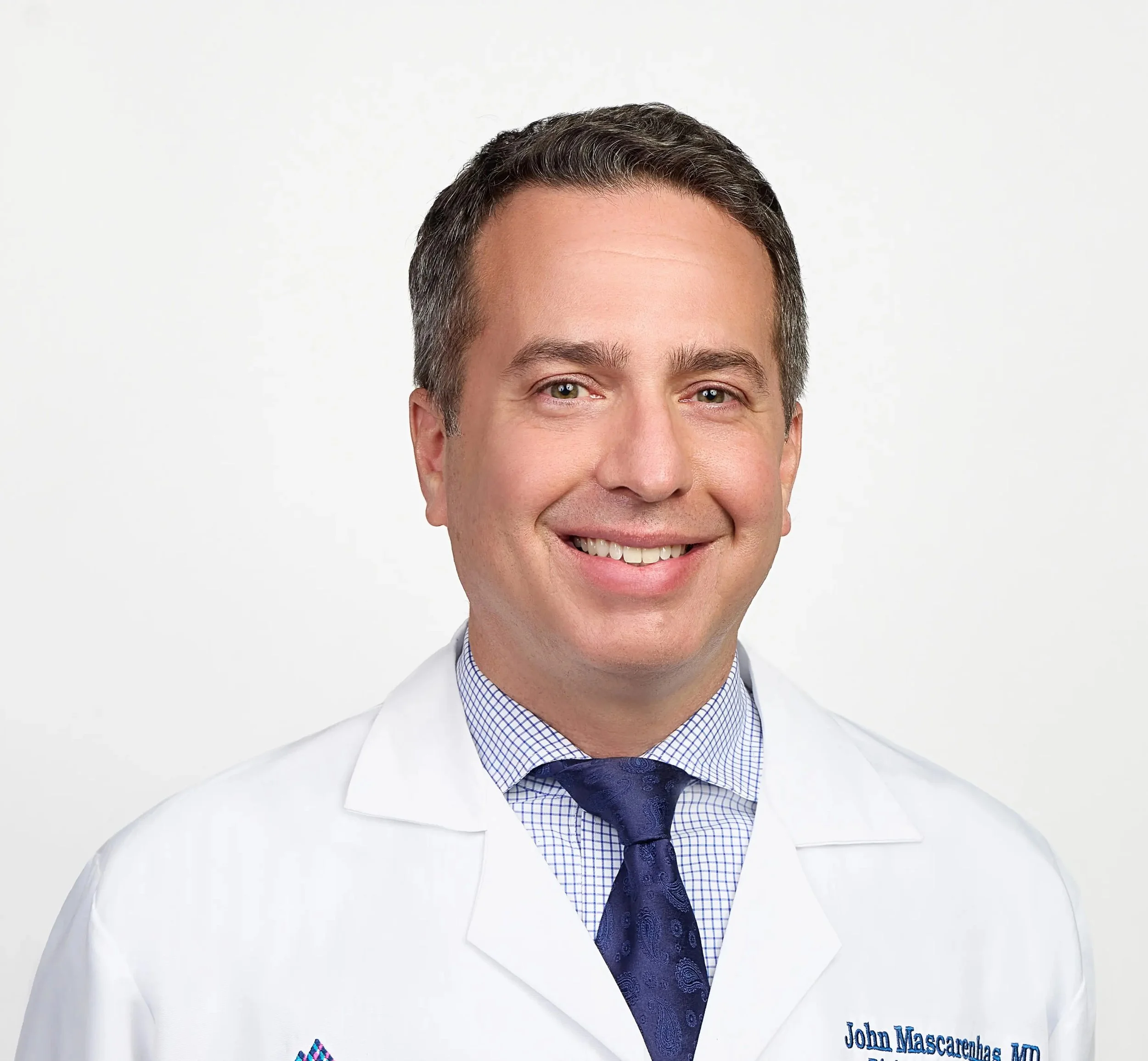
Dr. John Mascarenhas, MD
Few physicians ever get the chance to prescribe a medicine they helped shepherd from an early clinical trial to an FDA-approved therapy. Dr. John Mascarenhas, MD, has done exactly that numerous times. For more than two decades, he has worked at the intersection of laboratory discovery and patient care, helping transform scientific ideas into treatments that now change lives.
At Mt. Sinai Medical Center in New York City, Dr. John Mascarenhas, MD, serves as a clinician, translational researcher, and clinical trial leader. His work sits at the crossroads of laboratory discovery and patient care:
identifying promising scientific findings
testing them in clinical trials
determining whether they are ready to become tomorrow's standard of care.
Today, in addition to seeing patients, he directs the Adult Leukemia Program and helps lead Mount Sinai's myeloproliferative neoplasm research efforts.
Looking back, Mascarenhas considers himself fortunate. As he puts it, he entered the field just as "the revolution of molecular understanding" was beginning.
Before there were answers
When Mascarenhas entered the field, the molecular drivers of MPNs were still unknown. The landmark discovery of the JAK2 mutation would come in 2005, and treatment options were limited.
The outlook was discouraging enough that one nurse asked, “Are you sure you want to go into this field?” Mascarenhas understood the concern. At the time, it was a challenging specialty. As he recalls, “it was not satisfying because it was just very limited options and the outcomes were not great.” Physicians relied largely on hydroxyurea and supportive care, with few targeted approaches available.
Fortunately, he ignored the concern.
Yet the field offered something Mascarenhas found difficult to resist. He was surrounded by physician-scientists, fascinated by blood cancers, and increasingly drawn to translational medicine. More than treating patients or working in a laboratory alone, he was captivated by the possibility of connecting the two and helping discoveries move from bench to bedside.
Watching a revolution arrive
Many researchers spend their careers hoping to witness a breakthrough. Mascarenhas had a front-row seat.
After returning to the laboratory during fellowship, he began working on projects involving JAK2 biology under the mentorship of Ron Hoffman, MD. Around the same time, a small molecule called INCB18424 was showing remarkable effects in preclinical models. That experimental compound would eventually become ruxolitinib.
The story felt almost impossible. Years earlier, one of Mascarenhas's early research mentors had left academia to help launch a company focused on developing precisely these types of inhibitors. Now, a drug born from that vision was beginning to reach patients. What followed would shape the rest of his career.
“These patients were in wheelchairs. I mean, they were really ill,” he recalls. “And then, all of a sudden, we were treating these patients and they were getting up from their chairs…”
For Mascarenhas, the experience revealed exactly what he wanted his career to be. “I love watching the preclinical translate to the clinical and then seeing patients benefit from it and being part of that process.”
From one therapy to an expanding landscape
In 2011, ruxolitinib became the first JAK inhibitor approved for myelofibrosis. Its arrival transformed MPN treatment, but it was only the beginning.
Since entering the field, Mascarenhas watched MPN research evolve from a landscape with few therapeutic options into one filled with novel targeted therapies, rational combinations, and molecularly informed treatment strategies.
Along the way, he has contributed to studies involving therapies such as ruxolitinib, pacritinib, pelabresib, imetelstat, navtemadlin, and many others. His publications and leadership roles span some of the most visible current investigations in myelofibrosis and the other related myeloproliferative neoplasms.
The growth has been dramatic. Mascarenhas now oversees a broad portfolio of studies spanning first-line therapies, combination approaches, novel JAK inhibitors, and entirely new treatment strategies. “I’m not sure I know the number of clinical trials,” he says half-jokingly. “We have a lot of clinical trials at this point.”
Matching the right patient to the right opportunity
As treatment options have expanded, so too has the ability to individualize care.
“It may not be one thing will help everybody, but I feel like if you have a menu, you can really start to tailor and sequence treatment in a highly individualized manner.”
With an expanded therapeutic landscape, there are opportunities to match patients with treatments that fit their specific circumstances. Some patients may benefit most from an approved therapy, while others may be strong candidates for a clinical trial
He has also witnessed a shift in perspective on clinical trials.
Years ago, many patients viewed trials with suspicion. Today, Mascarenhas believes patients are more familiar with research and often arrive with a much deeper understanding of the role clinical studies play in advancing care.
“The perception of clinical trials has softened over the last 10, 20 years.”
He frequently reminds patients that every approved therapy was once an experimental trial.
“Those patients were pioneers that went into these clinical trials,” he says.
What affects him most, however, are the patients who understand that participation can help future generations. “I always find it super moving and emotional when I get patients who are making decisions and I know that they’re also asking, ‘Will this help other people?’”
Carrying discoveries across the finish line
Mascarenhas’s colleagues know him as a physician-scientist who is relentlessly curious, highly methodical, and always asking why.
Those traits have made him one of the field’s most visible clinical investigators. Whether presenting data at ASH, EHA, patient meetings, or leading major multicenter studies, he remains focused on the same goal that first attracted him to translational medicine: helping laboratory discoveries reach patients.
Scientific breakthroughs do not become medicines on their own.
They require more than a scientific breakthrough. Bringing a therapy to patients demands coordination among researchers, physicians, industry partners, regulators, and the patients who volunteer for clinical trials.
Today, Mascarenhas continues to help guide promising therapies through the critical steps between scientific possibility and clinical reality.
And for countless patients receiving therapies that once existed only as experimental ideas, that work continues to make all the difference.
Clinical trials and you
If this article has inspired you to check on local access to clinical trials in your region, please click this link to the Clinical Trial Finder. This resource can help you identify actively recruiting clinical trials, explore studies that may be relevant to your diagnosis, and support discussions with your healthcare team about potential participation.